study-techniques
Common mistakes in language learning
10 min read
study-techniques
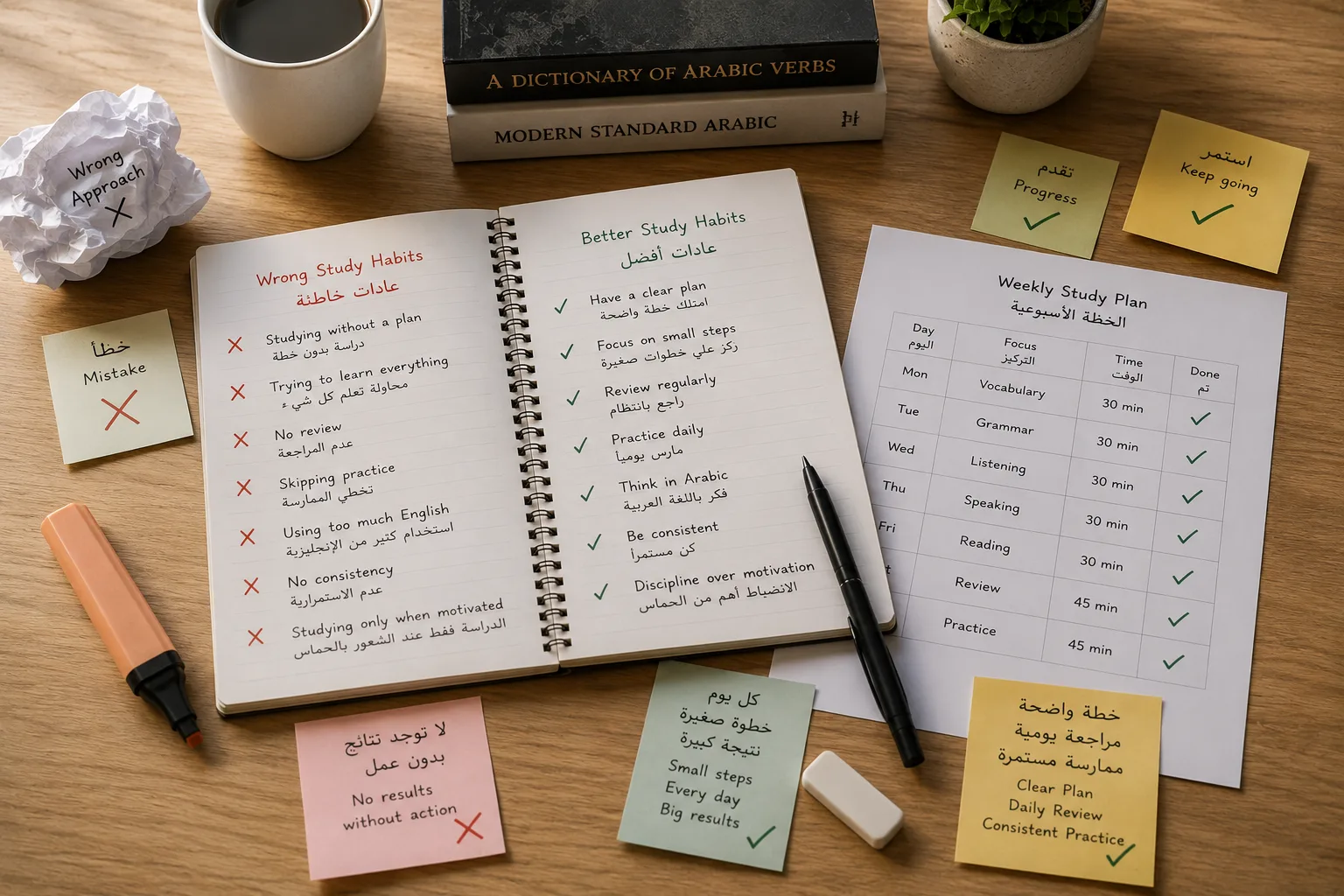
Learning a language is a long journey, and mistakes are a natural part of it. But some errors in the method itself slow down progress or stop it completely. Seeing these patterns early saves months of frustration.
The news is that most common mistakes are not related to talent. It is related to habits. Habits can be changed.
Whoever starts from an advanced book while being a beginner feels helpless. Whoever starts from a very low level and is average gets bored quickly. In both cases, the most likely option is to stop.
The solution is simple: Free level test before any purchase or long-term commitment. Ten minutes of diagnosis saves weeks of going wrong.
An application here, a channel there, a book on the shelf, a course half done. Each resource promises fluency. The result: fragmentation and lack of depth.
Choose a maximum of two resources: one for structure (course or book), and one for conversation (tutor or language exchange). Complete a month before adding something new. One comprehensive course is better than five starts.
Many say: I will speak when I learn more. But conversation is a skill that is built by practice, not by waiting. Every week of postponement increases fear.
Start speaking from the first week. Short sentences, lots of mistakes, no problem. Private Lesson Provides an error-safe environment. The teacher expects mistakes and treats them as a learning opportunity.
Grammar is important, but it is not the entire language. Whoever memorizes time tables without listening or speaking understands the theory and cannot speak.
Balance your day: part grammar, part listening, part speaking. Even if speaking is repeating overheard sentences. Balance builds multiple skills together.
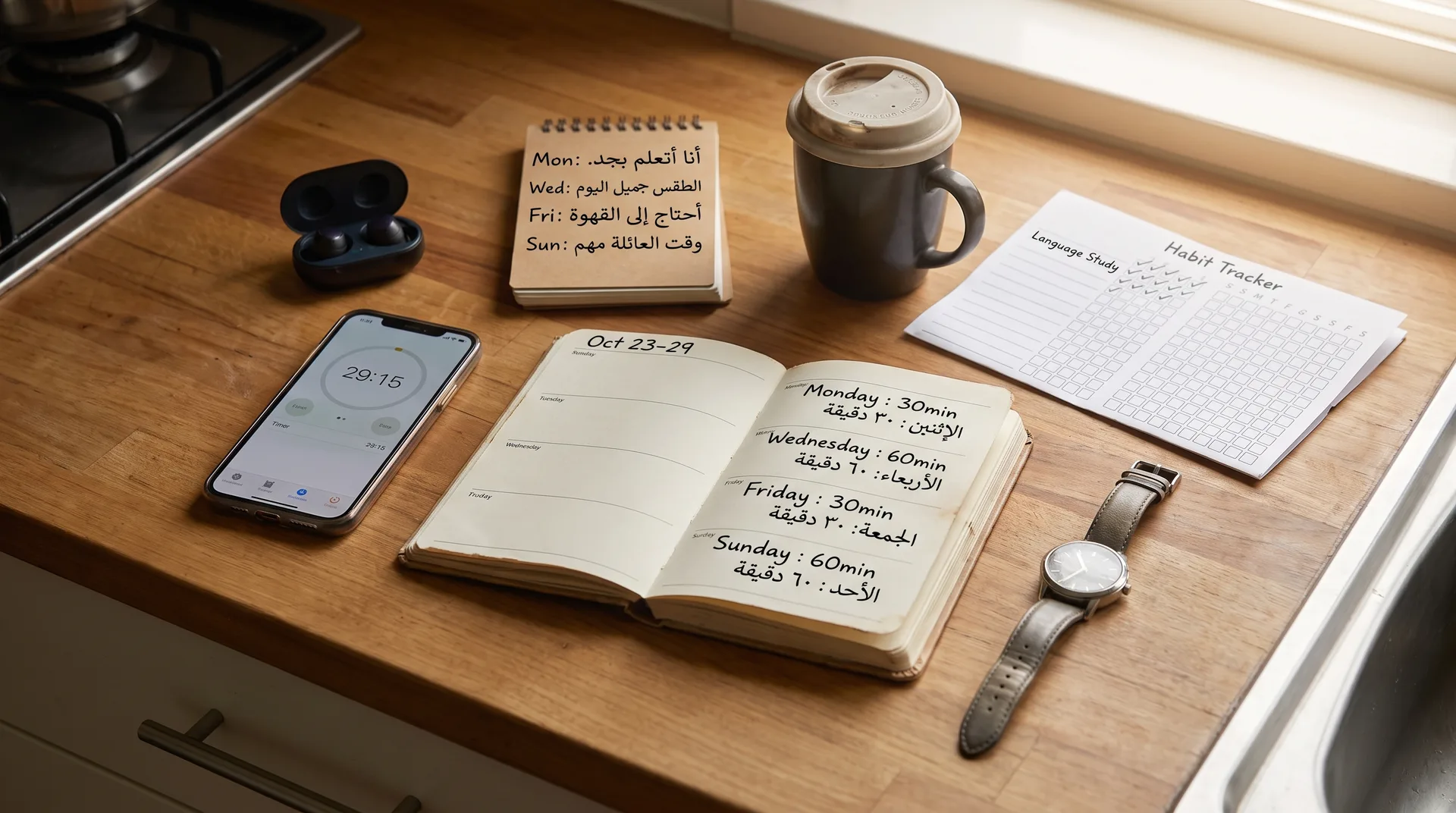
Learning when I remember means that you will not remember often. A fixed date on the calendar turns an intention into a habit. Monday at seven o'clock, for example, a lesson or review. No negotiation.
Habit is stronger than enthusiasm. Enthusiasm comes and goes. The fixed date remains.
Does your colleague learn faster? Maybe he has a closer background, or more time, or a different goal. Comparison steals joy and does not accelerate your learning.
Compare yourself to yourself a month ago. Do you understand more? Do you speak a little more fluently? This is the only useful criterion.
Language enters the ear before the mouth. Whoever neglects listening is surprised by the speed of natural speech and thinks that he is not ready.
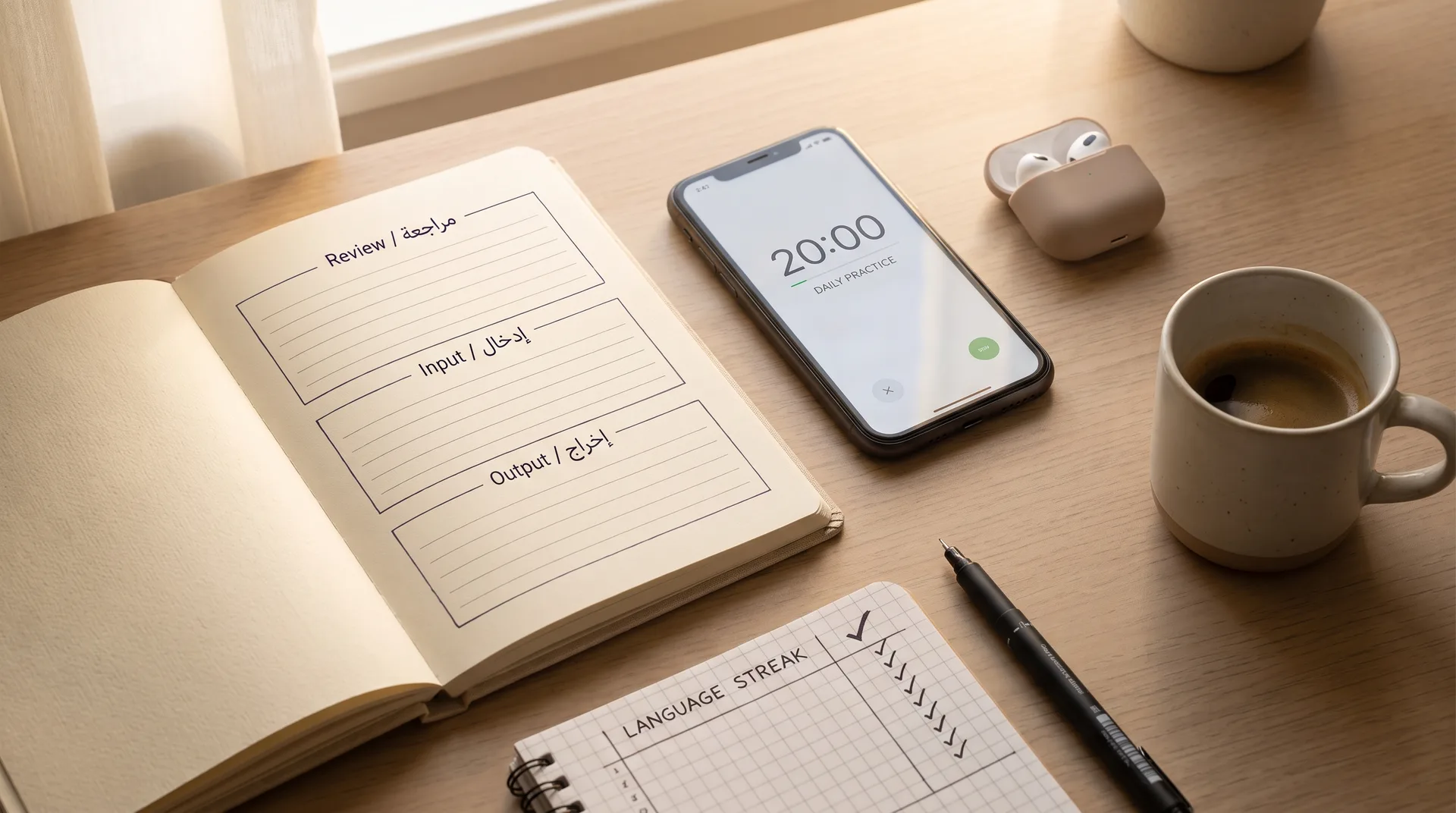
Allocate fifteen minutes a day to listening. Even if you don't understand everything. The brain adapts to rhythm and tone. Over time, you begin to distinguish words from the context.
Difficult lesson, busy day, forgetting to review. It is happening. Whoever stops for two weeks because of one bad day loses momentum.
The rule: No two consecutive days pass without touching the language. Even five minutes are enough to break the chain of negativity.
Self-learning without a mirror means mistakes that are repeated until they become hardened. The teacher or exchange partner gives you a mirror. Ask for correction explicitly: Correct me when I make a mistake.
Some learners are ashamed of mistakes, so they ask the teacher not to correct them. This slows progress. It is better to make a mistake in front of a teacher than to make a mistake in front of a stranger.
Test your level before starting
Choose one resource and complete it a month
Book a weekly speaking lesson
Put a fixed date on the calendar
Review your progress monthly. Daily
Errors in content are normal. Errors in the method are optional. Start with diagnosis then Build a correct habit from the first week.
Some learners focus on the meaning They neglect pronunciation. Later it becomes more difficult to modify the habit. Take minutes to repeat out loud from day one. The teacher helps you hear the difference between your pronunciation and natural pronunciation.
Memory fails after hours. What you learned in the lesson disappears if you do not write it down. Three sentences in your notebook after each session are sufficient. A quick review before the next lesson strengthens the connection.
Good marks: You understand passages that are longer than a month ago. It takes less time to think before a simple sentence. Laughing at something you understood without translation. These are real signals that are more accurate than the number of words memorized.
If you do not see any change after two months of commitment, review the level and method. Maybe you need a teacher or a clearer plan. Editing is not a failure.
Spending hours comparing applications and courses without starting is a common mistake. Pick one and try it for two weeks. A good executed decision is superior to a perfect delayed decision.
Learning is serious but it should not be punishing. Watch a fun clip, read a short story, play a word game. Fun keeps you on the journey when routine gets overwhelming.
Choose one mistake from this list this week. Just focus on it. Next week another mistake. Gradual change is more effective than trying to fix everything at once.
If you feel stuck for a month, don't wait six months. Talk to a teacher or change resource. Seeking help early saves time and psychological energy.
If you realize that you are repeating mistakes in your method, stopping for a week to reorganize is better than continuing on the wrong path for six months. Restarting with a clearer plan is not failure, but maturity in learning.
Review this list every month. Are you still making the same mistake? Focus on just one until it disappears and then move on to the next.
Learning is a skill like any other. Errors in the method are normal. Correcting it early makes a difference.
Correcting the learning method is faster than starting again from scratch after years of wrong habits.