study-techniques
A weekly study plan for busy people
10 min read
study-techniques
The most common excuse for learning languages: I don't have time. The truth is that most successful people do not have extra time. They set aside a small, consistent amount of time and stick to it. The plan we present here requires only three hours a week, distributed over separate days.
The idea is not to add hours to your busy day. The idea is to rearrange small priorities: reduce random scrolling, take advantage of waiting time, and make language part of an existing routine.
An effective plan starts from reality. A quick level test prevents you from spending weeks reviewing what you know or skipping over what you need. Take the free test at the end of week zero, before you start the schedule.
This breakdown is suitable for someone who works full time:
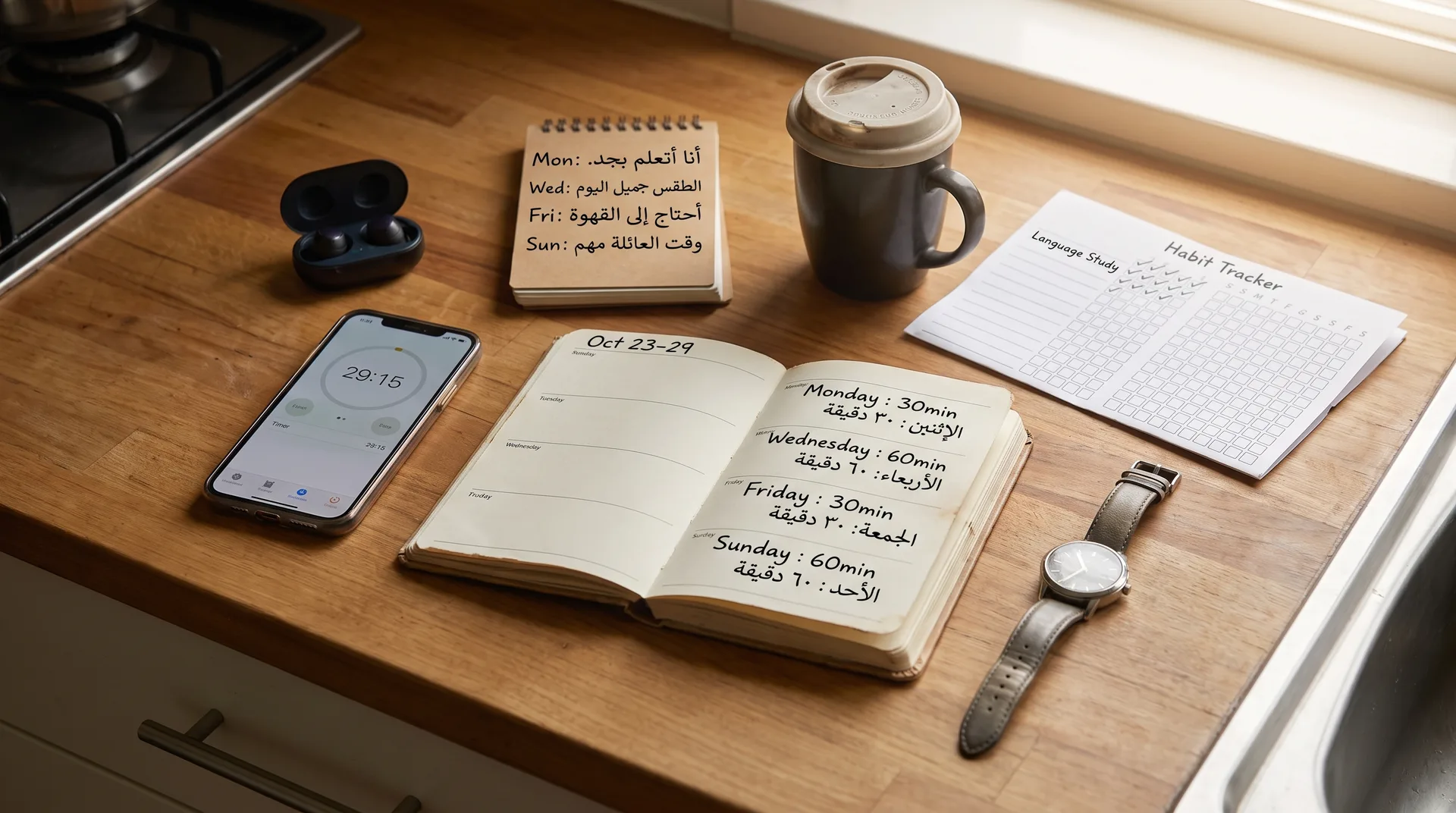
Monday (30 minutes): Review last week's words. Read aloud. Write one sentence for each new word.
Wednesday (60 minutes): Private or live group lesson. This is the heart of the week. Do not cancel it unless necessary.
Friday (30 minutes): Listen to a short clip. Rehearse the sentences you did not understand. Repeat the content in your voice.
Sunday (60 minutes): Recorded lesson or short reading from Available courses. Write down three new expressions.
A total of three hours. You can alternate days, but keep two short sessions and two longer sessions.
Between formal sessions, take advantage of dead moments. Five minutes on transportation is enough to review ten cards. Waiting for coffee is a good time to hear one sentence and repeat. These little moments add up.
Temporarily change your phone's language for some apps. Not forever, but for an hour a day. You'll be exposed to vocabulary in a real context without extra effort.
If there are only ten minutes left in the week, don't cancel the session. Ten minutes review is better than zero. The brain learns by spaced repetition, and short, frequent repetitions are more powerful than infrequent marathons.
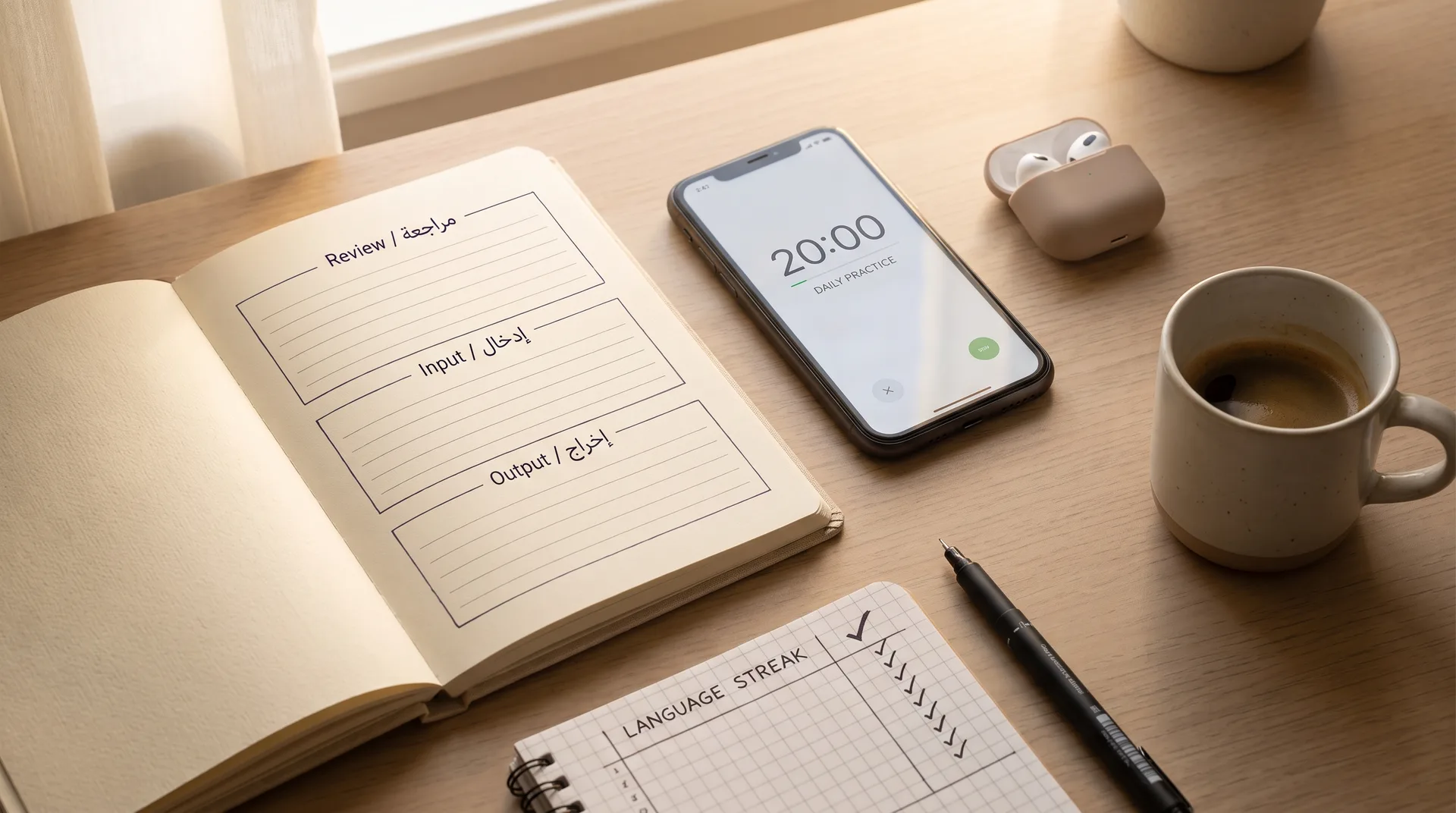
Set a timer. When it rings, stop even if you are in the middle of an activity. Stopping on time keeps you from getting tired and keeping you waiting for the next session.
Self-reviews build vocabulary. Live lesson builds fluency. Even if you have little time, reserve one session a week with a tutor. Book a fixed appointment on the same day and hour every week.
Tell your tutor that your time is limited. A good teacher compresses the content and focuses on what matters to you. Don't be shy about saying you need an extensive plan.
Every Friday, write one sentence in which you answer: What did you learn this week? One sentence is enough. After a month, read the four sentences. You will see progress that you may not feel every day.
You can also record a minute's worth of audio every month. Comparing records is a powerful motivational tool.
There will be a week where you get sick, you travel, or your schedule falls apart. Don't stop weeks because of one bad week. Come back the next Monday with the same plan without doubling the load to make up for what was missed.
Double compensation leads to fatigue and stopping. Slow continuity wins over short bursts.
When the routine becomes a habit, add thirty minutes weekly. not now. Start with the minimum that you can commit to for a full month. After a successful month, increase gradually.
Three hours a week for a year is equivalent to more than one hundred and fifty hours. This is enough to go from beginner to comfortable conversationalist in many cases.
Start with the level test, then implement the plan. Free Test and Weekly Lesson are the foundation of success for busy people.
If your schedule changes weekly, stick to it. The number of hours, not the days. Three hours on any combination of days. Book your live lesson early when you know your vacation. Flexibility in the day is better than canceling the entire week.
Keep a small bag: headphones, notebook, printed word list. Preparing in advance reduces the excuse when your day suddenly changes.
Tell those who live with you when you are studying. Even if it's fifteen minutes, mutual respect for time minimizes interruptions. Some families learn a new word together at the dinner table. Simple and fun.
On the last Sunday of the month, review your attendance marks in your notebook. How many weeks did you commit? What is the biggest obstacle? If it's time, reduce the goal instead of canceling. If boredom occurs, change the listening source or lesson topic with your teacher.
After a successful month with three hours, add thirty minutes weekly. Perhaps one extra review day or one group lesson per month. Slow expansion prevents collapse. You're building a marathon, not a sprint.
A paper calendar on the fridge, or just one reminder app. Too many apps means too many ignored notifications. One reminder at the same time every day is better than five random ones.
Prepare one file for notes. Each session on a page. Searching later is easier and reviewing is faster.
On busy weeks, limit it to two hours, not zero. One hour of review and one minute of listening daily, and one lesson if possible. Maintaining the thread is more important than complete achievement.
A seventy percent week is better than one perfect week and then stop. Accept that some days will be missed. Continue the next day. Busy, successful people are not those who find time, but rather those who constantly protect a little time.
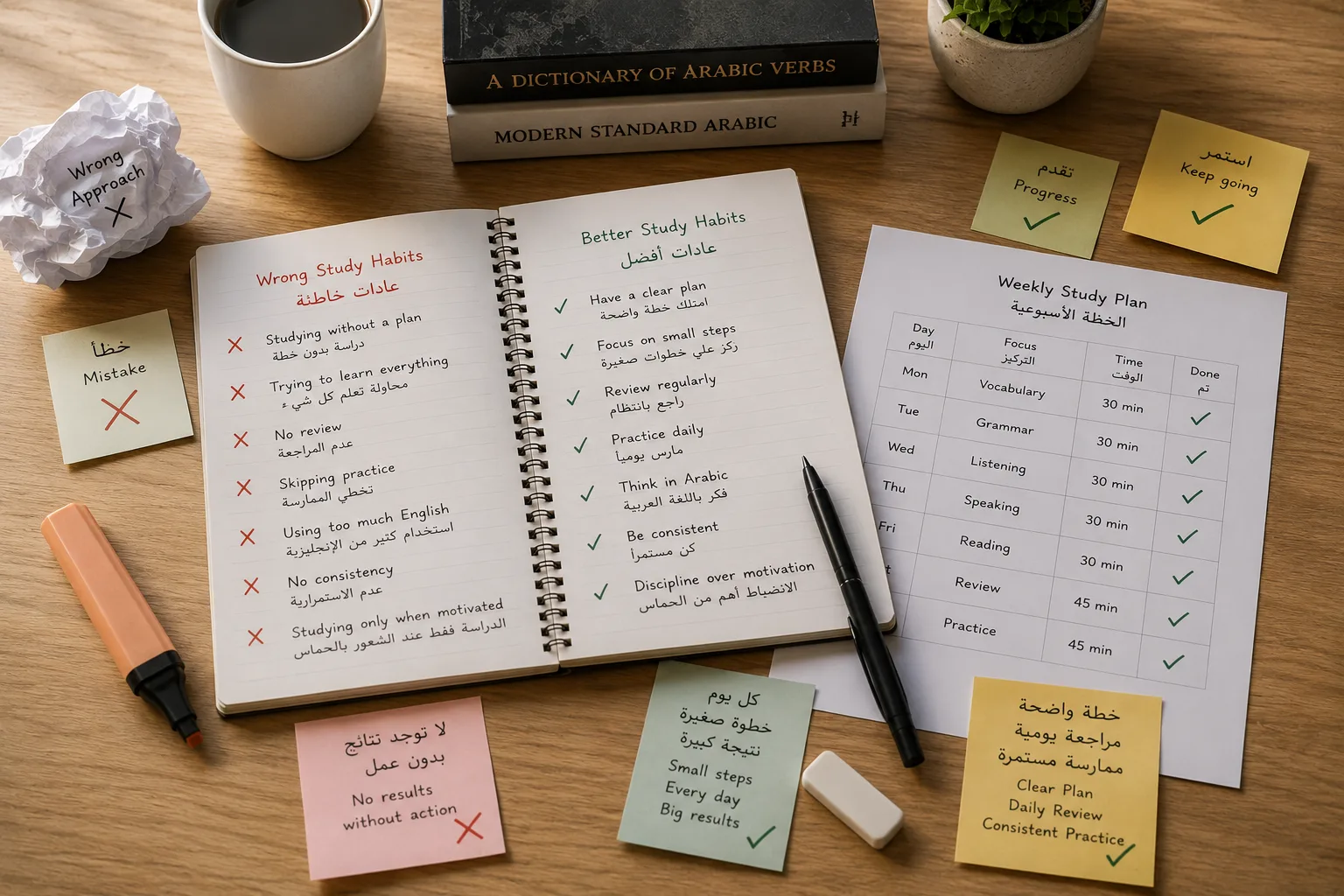
Put the plan on one piece of paper and hang it up. A daily view of the plan reminds you that the goal is small and possible. Three hours a week is enough for most busy schedules.
A small, committed plan is better than a large, neglected plan. Start with three hours and prove you can before you think about more. Each successful week builds confidence for the next week and makes it easier to keep going.