study-techniques
Daily language practice schedule
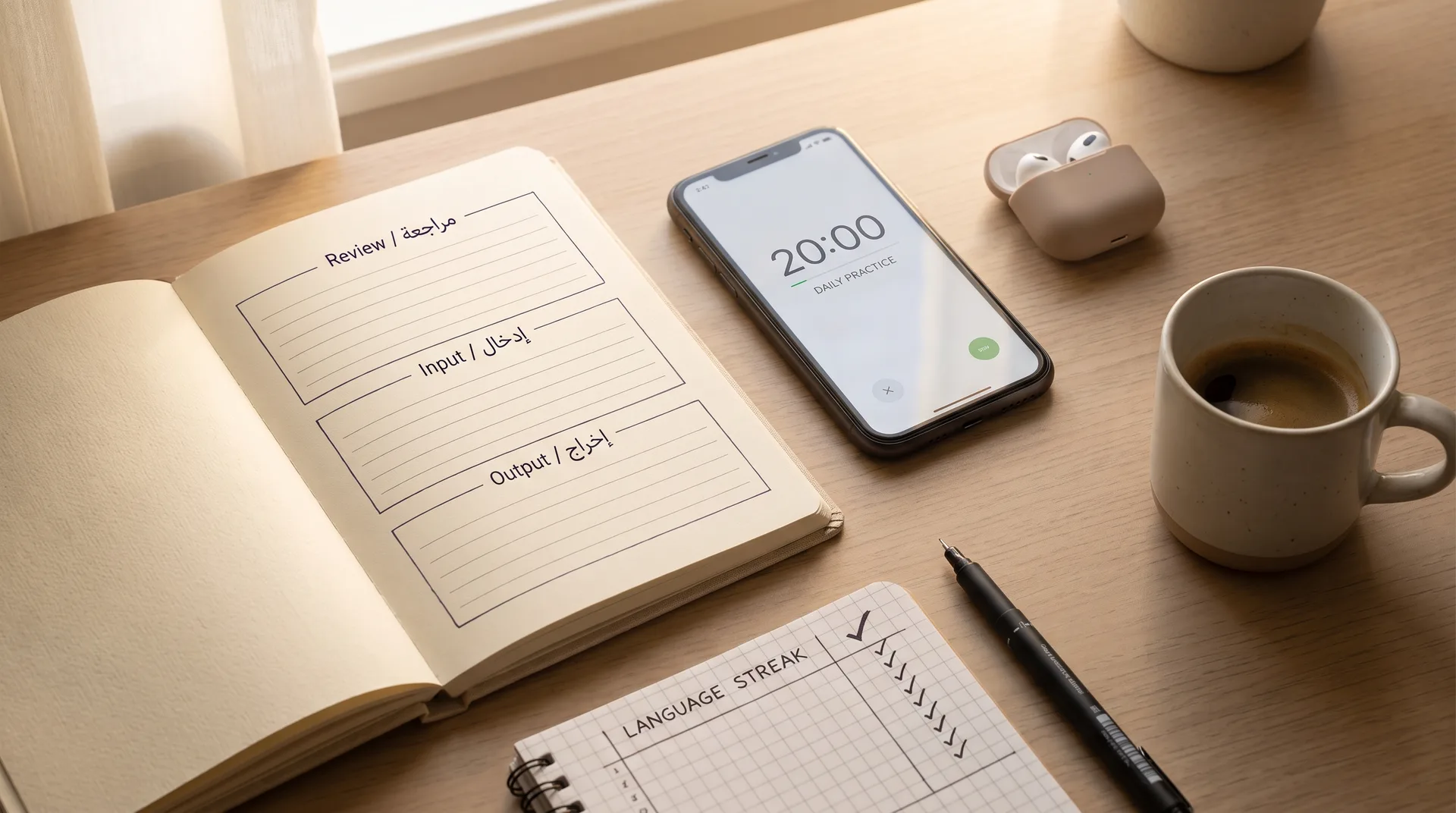
Table of contents
Most frequently asked question: How much do I need to study daily? The short answer: less often than you think, but more regularly than you think. Twenty minutes a day, at a concentration exceeding two hours a week, intermittently.
The schedule we present here is not a law. It is a form that you can modify. The idea is to distribute skills: listening, reviewing, producing. Balance builds usable language, not just theoretical knowledge.
Before the schedule: Your level
The practice schedule varies between beginner and intermediate. The beginner needs more repetition of basic sounds and words. Intermediate requires exposure to longer texts and deeper conversation. Level Test Shows where to weight each activity.
Today's Sample: Twenty Minutes
Minutes 1-5 (Review): Review yesterday's words. Read it out loud. Cover the word and try to remember the meaning.
Minutes 6-15 (Enter): A short recorded lesson, listening, or reading a passage from the course. Write down three new phrases.
Minutes 16-20 (direction): Repeat the phrases in your voice. Register yourself if possible. Or write one sentence with the words of the day.
When the timer goes, stop. Sticking to the limit prevents burnout and makes tomorrow easier.
Sample day: forty minutes
If you have more time, double the input and output, not review:
5 minutes: Review
20 minutes: Lesson or longer listening
10 minutes: Read aloud
5 Minutes:Write two sentences about the topic
Where does the private lesson come in?
The daily schedule builds the foundation. The private lesson corrects and directs. At least once a week, book a session with a tutor. Make a fixed appointment on the same day every week.
The day after the lesson, review the teacher's notes in the first five minutes of your schedule. This connects the live session to daily practice.
Adapt the schedule to your work
Early morning suits some people: mind clear before mail and meetings. Others prefer midday or before bed. Try it a week at a time and then stick to what works.
Put a reminder on your phone with the same name every day: Language practice. It is not a lesson or an assignment. practice. The name changes the feeling.
Rest Days
One rest day per week is acceptable. But instead of a complete zero, five minutes of light listening keeps the thread going. The brain forgets faster than we expect when it is completely interrupted.
Simple tracing
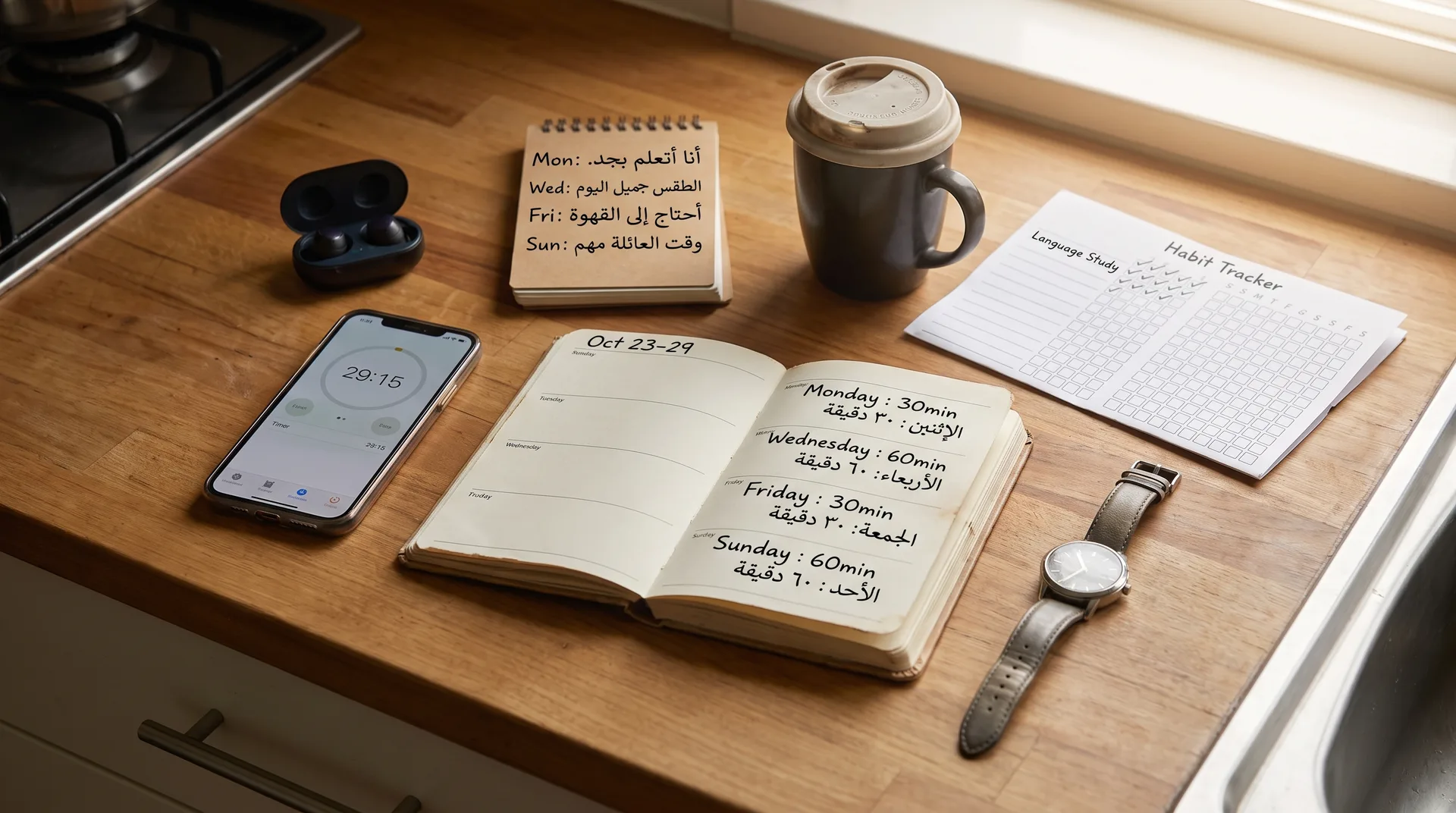
A paper chart with seven squares. Every day you practiced, make a mark. Goal is a long series, no day is perfect. When the series breaks, start a new series without blaming yourself.
When do you adjust the schedule?
After a month, ask: Do I feel progress? Is the schedule boring? If it's boring, change the input source, not the time structure. If you don't feel progress, increase the output or add a second lesson weekly.
Twenty minutes a day for a year equals more than one hundred and twenty hours. This is enough to turn a beginner into a confident learner in many paths.
Determine your level, set the schedule, and add a weekly lesson. Free Test and Tutor complement what you build daily.
Practice during routine activities
Brush your teeth while repeating a sentence. Cook while listening to a short clip. Practice doesn't always need an office. Linking to a daily routine increases repetition without adding new time.
For busy parents
Five minutes after the children go to sleep is enough. Or wake up a quarter of an hour before the family once a week for a longer lesson. Don't wait for complete emptiness. Complete free time is rare.
When traveling
Carry a printed word list or an offline review app. The airport and plane are an excellent time to listen. Tell your teacher in advance to reschedule the lesson without losing momentum.
From Schedule to Habit
After six weeks of daily grading, the schedule becomes automatic. Then you can increase the minutes or add a new activity. Habit first, quantity second.
Weekend Schedule
Saturday: Longer review of the week's words. Sunday: Prepare for Monday’s lesson by writing one question to the teacher. One distributed clock links the seven days together.
When bored
Change the input source, not the time structure. Podcast instead of a lesson. Song instead of text. The important thing is to stay in touch with the language even during a boring week.
Measure quality, not just quantity
Twenty focused minutes are worth an hour with a phone by your side. Put the device on silent. Close tabs. Quality counts.
Link the schedule to the goal
If your goal is to listen, increase the listening minutes in the schedule. If speaking, increase output. The schedule is a tool to serve the goal, not the opposite.
Start tomorrow
Don't wait for Monday. Start tomorrow with a five-minute review. Tomorrow is closer than next week.
Quarterly Review
Every three months, review the chart: Does it still fit your life? Do you need to increase or reduce? Flexible scheduling lives with you. A strict schedule is broken.
Patience for results
The daily schedule seems small, but its effect is cumulative. Like saving: small, recurring amounts make a big sum. Trust the process even before you see the full result.
Tie the schedule to a fixed time: after breakfast, or before bed. Permanent link turns the habit into a part of your day, not an additional task.
Twenty minutes a day for six months will noticeably change your level. Start today and don't wait for ideal conditions.
Set a timer for twenty minutes and get started. Tomorrow is better than next week when it comes to building a daily habit. A simple schedule you stick to wins over an ambitious, neglected plan. Twenty minutes a day, a small decision with big results.