guide
The first 30 days of learning a language
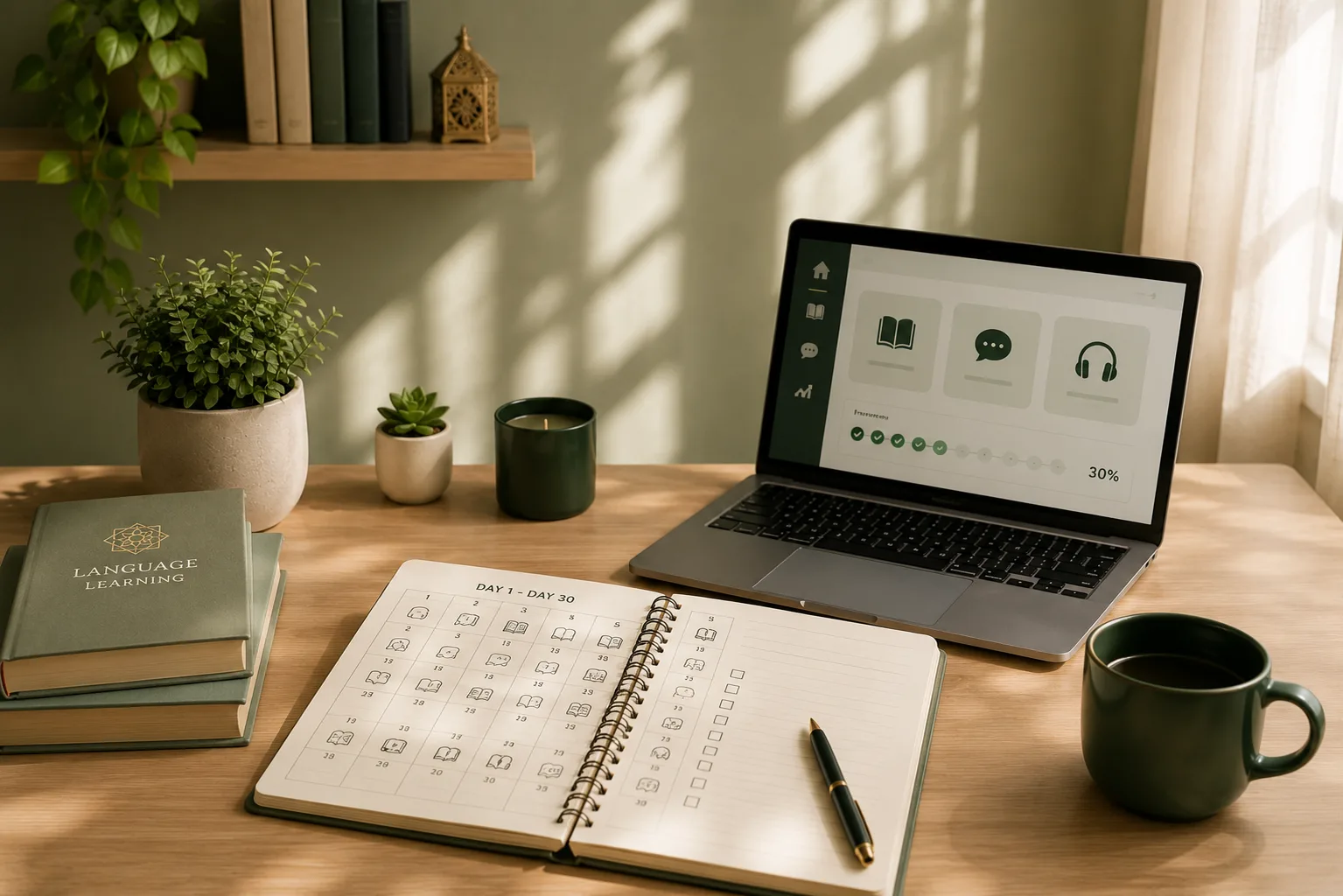
Table of contents
The first month of learning a new language is a sensitive period. Enthusiasm is high, ambition is high, and the risk of early stopping is real. Whoever goes through thirty organized days builds a habit that lasts. Whoever starts randomly often stops at the first obstacle.
This plan is not a complete approach. It is a practical framework for the first 30 days. You can adjust it according to your time, but keep the spirit: simplicity, continuity, and measurement.
Before the first day
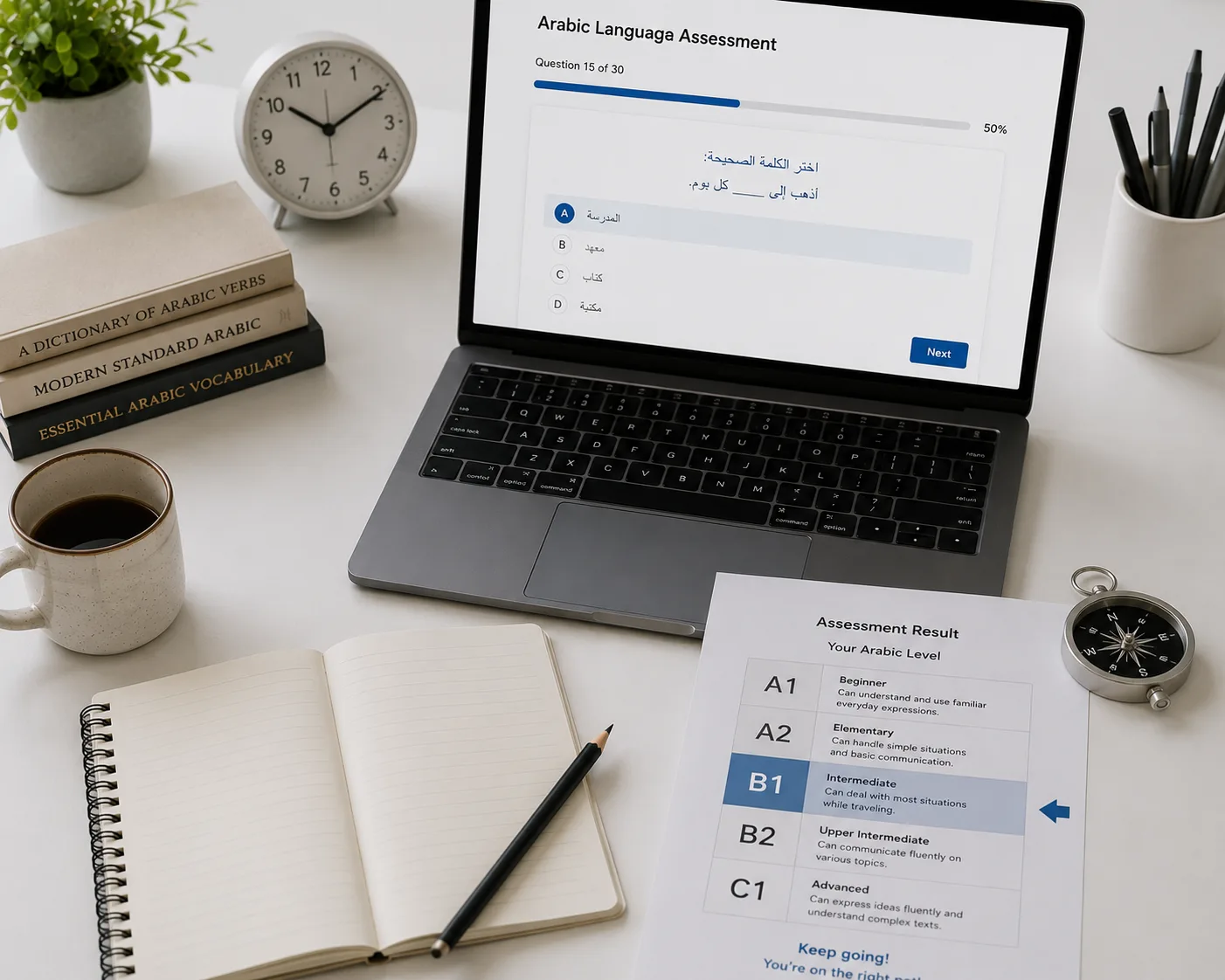
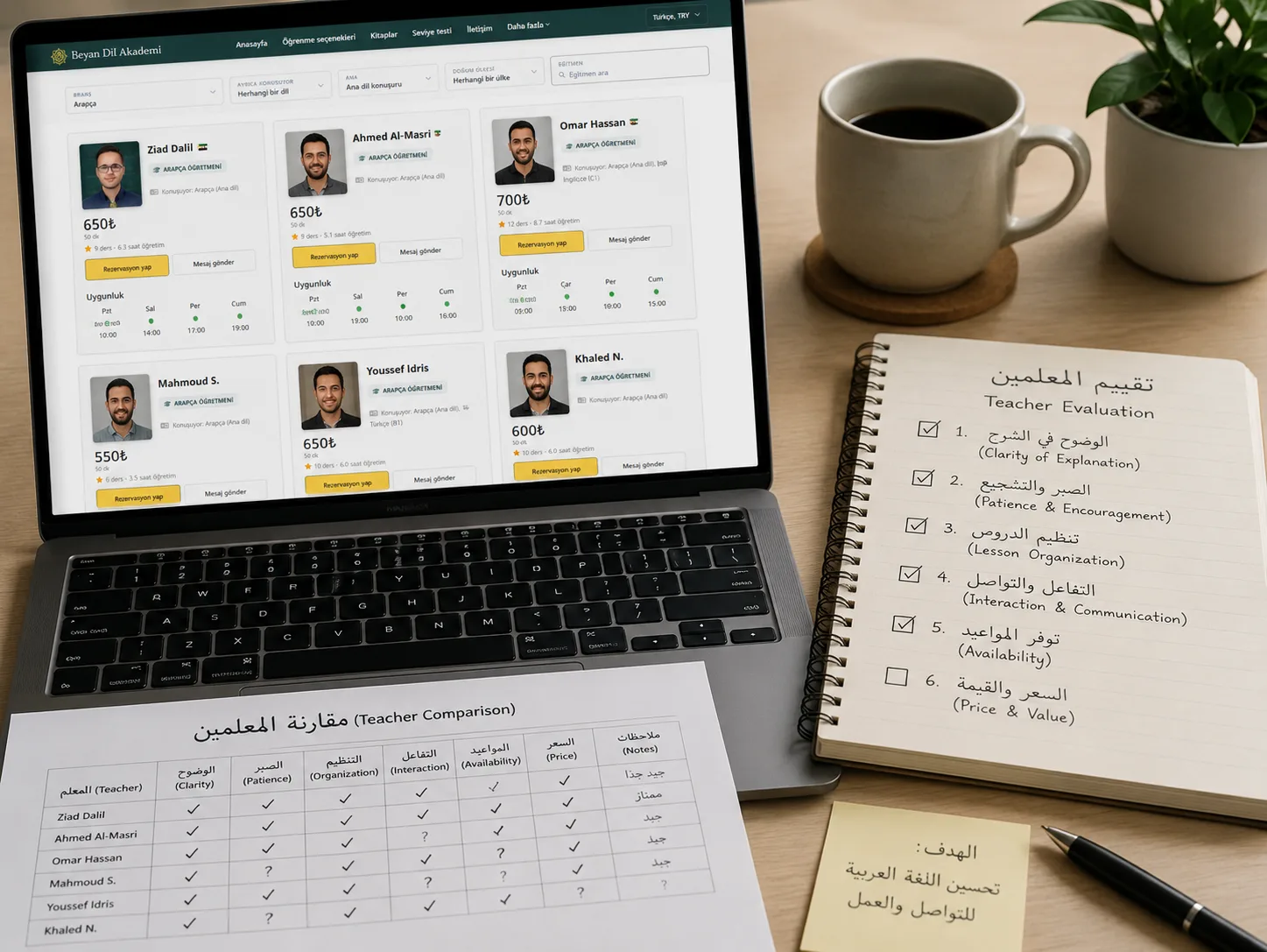
Set aside half an hour for preparation. Take the Placement Test. Write one goal for the month: For example, I introduce myself and talk about my day in simple sentences. Book a trial lesson for the first week via the tutors page.
Prepare a quiet place and headphones. Create a digital folder of notes. Simple preparation reduces friction in the first days.
Week 1: Foundation
The goal this week is familiarity with the language and the routine, not mastery.
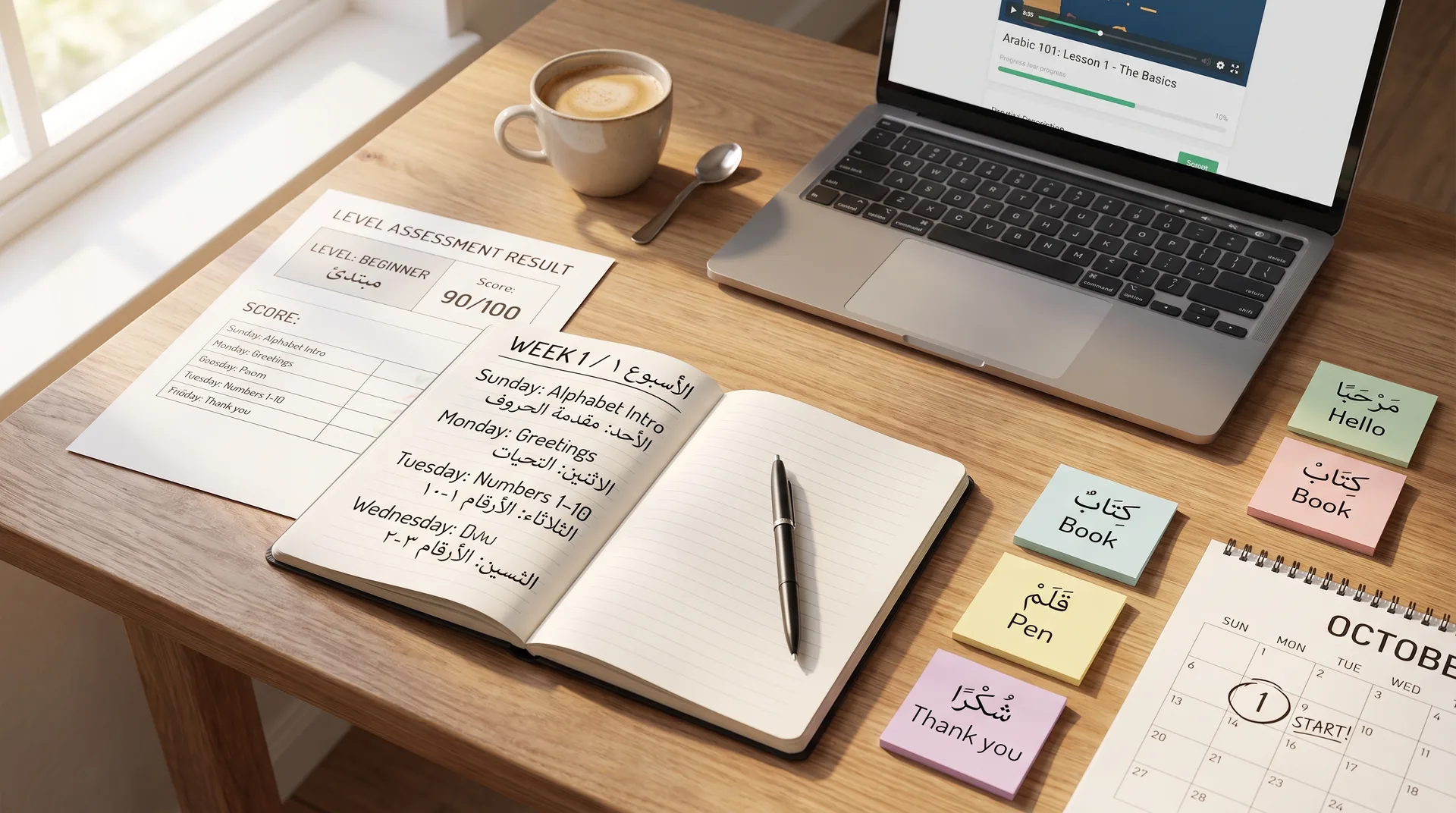
Day 1-2: Placement test and review of the result. Write ten words from the test that you did not know.
Day 3:Private trial lesson. Focus on listening and repeating.
Day 4-5: Review ten minutes daily. Repeat the greetings and sentences you heard.
Day 6: Listen to a short clip appropriate to your level.
Day 7: Review the week. What did you remember without help?
Week 2: Building
Increase the exposure a little. Add a second review session if possible.
Day 8-10: Two short recorded lessons or from an appropriate course.
Day 11: A second private lesson. Ask the teacher for a simple daily topic.
Day 12-14: Write three sentences about your day every evening. Even with the help of a dictionary.
Don't expect fluency. Expect to remember more than you did in the first week.
Week 3: Speaking More
This week focus on output: speaking and writing.
Day 15: Record yourself reading a short paragraph.
Day 16-17: Two private lessons or private and group. Ask for intense correction.
Day 18-20: Talk to yourself for five minutes a day. Describe what you see from your window.
The error occurred. The goal is to break the silence, not perfection.
Week 4: Evaluate and Plan
Last week to review and look ahead.
Day 21-24: Continue the routine. Do not add new resources.
Day 25: Record yourself with the same text from Day 15. Compare.
Day 26-28: Review all notes. What topic was repeated?
Day 29: Discuss with your teacher the plan for the coming month.
Day 30: Celebrate the completion of thirty days. Write what you learned in a sentence.
Golden rules for the first month
Do not compare yourself to learners who started years before you. Don't buy five books. Don't skip the conversation. Don't cancel the appointment because you're tired. Ten minutes is enough.
If you miss days, do not try to make up for them by doubling the load. Return to the routine the next day.
After 30 Days
Most committed learners notice a clear difference in confidence more than in vocabulary. Speak more without fear. Understand more signals in listening. This is a strong foundation.
The second month is a time to expand: increase the private lesson, add a Group Course, or delve into a recorded course. The decision depends on what you discover about your style.
Get started today. Level test Then First lesson. Thirty days from now you will thank yourself.
What if you miss days in the middle of the month?
Do not count again from zero. Continue where you left off. Take one day off for light review and then continue with the plan. Thirty days is a flexible goal, not a strict contract.
Partner or friend support
Tell someone close to you about your plan. He asks you weekly: How is studying? This simple social obligation increases loyalty. You don't have to learn with him, just to participate.
Signs of success at the end of the month
You don't need complete fluency. It is enough to understand more than on the first day, to have a fixed weekly appointment, and to know your level and goal. This is a solid foundation for the second month.
Avoid common relapse
After the thirtieth day, many people take a two-week break and lose the habit. Slow down the pace but don't stop. Ten minutes a day in the fifth week protects what you have built.
Short diaries
Write one line in your notebook every evening: What did you learn today about the language or about yourself as a learner? After thirty lines, you will have a personal record of the trip stronger than any temporary certificate.
Week 5 and beyond
After the 30 days, set a goal for the second month: for example, a five-minute conversation without a long pause. One goal is enough. Share it with your teacher.
Realistic Celebration
No party necessary. A cup of coffee in a new place while you order in your new language if possible. Or video chat with a friend. Celebration links effort to a tangible result.
Recording the Journey
On Day 1 and Day 30, record yourself saying the same sentences. The difference will surprise you. Keep both recordings as a reminder that a difficult start is temporary.
The first month is a gift to yourself
You don't build complete fluency in thirty days. Build habit and confidence. This is what remains after the month is over. Be kind to yourself on difficult days and firm on simple appointments.
Every evening, write one line in your notebook. After a month, read the thirty lines. You'll be surprised at how much you've learned, even on days when you feel like you're not progressing.
The first month is not a test of talent. It is a test of commitment. Pass it honestly and you will be ready for the next stage.
Thirty days are enough to build a habit. It is not enough for perfection, and this is not what is required in the first month. Continuity here is more important than fluency. Every day you commit brings you closer to someone who speaks with more confidence.